
Why Choose Acrylic Over Glass?
- Jul 20 2026
- /
- 519
If you think of every annoying door in a typical apartment block, you may be shocked to realise that 5 minutes of learning can solve almost every issue without the need for a professional.
Actually I cheated and researched this whilst the professional was on site. He had 20 years of experience installing doors. However a little knowledge goes a long way.
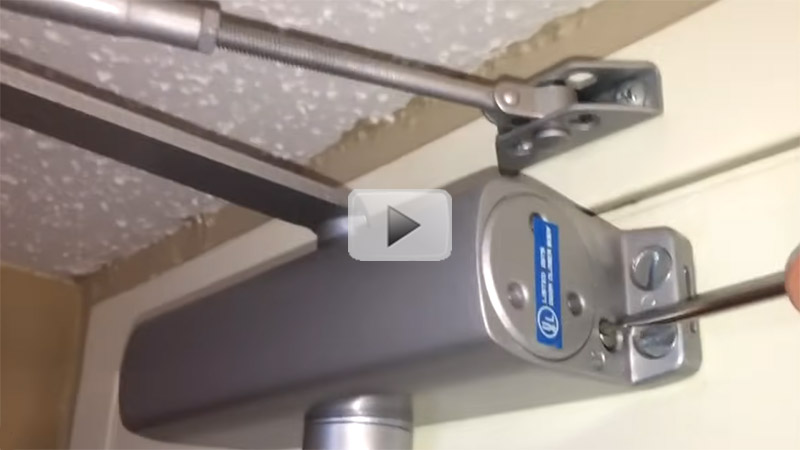
There is a set of terminology for door closers. They can be adjusted by a simple turn of a screwdriver.
In this article we are focussing on the typical front door, that gets a lot of use. The brand we use in the diagram is a Ryobi.
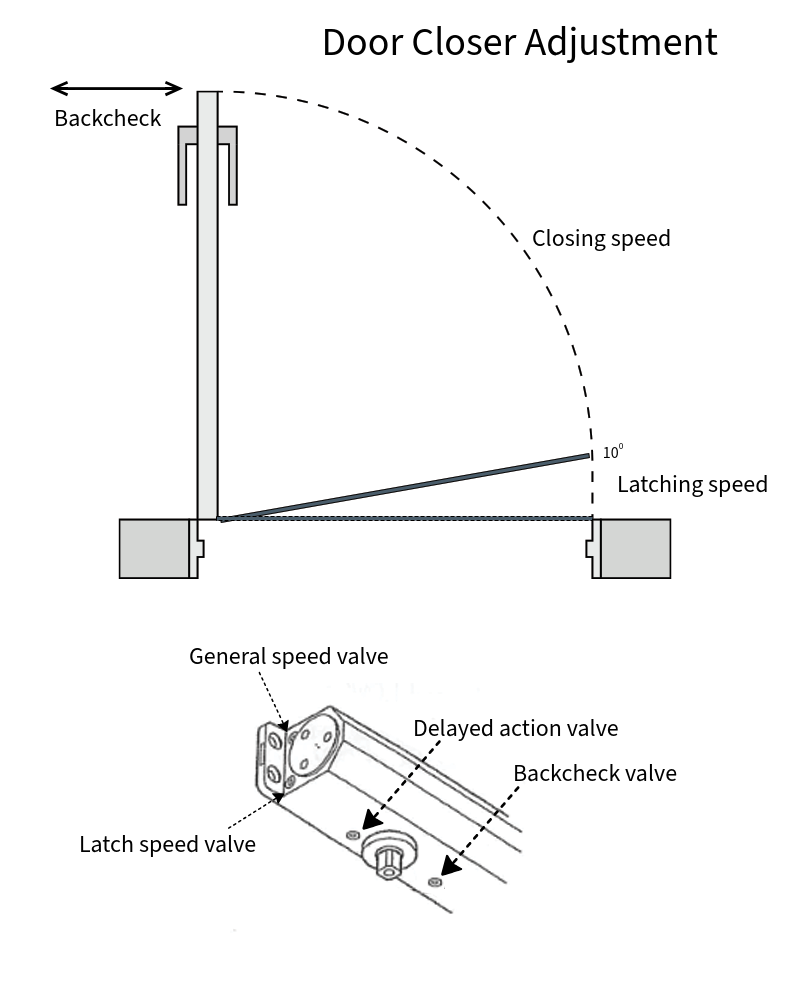
Latching speed refers to how fast a door closer moves the door through the final 10–15 degrees of closing so it can engage the latch securely without slamming. It's a fine‑tuning adjustment that ensures the door actually clicks shut while still closing safely and quietly.
The last part of the closing arc — typically the final 10–15° before the door reaches the frame.
Overcoming latch resistance so the door fully engages the strike plate.
Preventing slamming by controlling hydraulic pressure in that final movement.
Ensuring security — a door that doesn't latch properly won't stay closed.
Too fast: the door slams, causing noise, damage, and safety risks.
Too slow: the door may not latch at all, especially against air pressure or weather seals.
Just right: smooth, quiet closure with a positive latch.
Most door closers have a screw labelled "L" (latch) or "LS".
Clockwise → slows the latching speed
Counter‑clockwise → increases the latching speed
Adjust in very small increments (⅛ turn) and test each time.
Closing speed is one of the core adjustments on a door closer, and it refers to how fast the door travels from fully open down to roughly the last 10–15 degrees before it begins the latching phase.
Closing speed controls the main sweep of the door — the large arc where the door moves from open to nearly closed.
It covers most of the door's travel, typically from about 90° down to 15°.
It determines how quickly the door moves during normal closing.
It's separate from latching speed, which only controls the final few degrees.
Safety: Too fast and it can hit someone; too slow and it feels sluggish.
Accessibility: Helps meet standards for easy, predictable door operation.
Energy efficiency: A properly tuned closer prevents drafts and keeps conditioned air inside.
Door longevity: Reduces stress on hinges and the closer body.
Most closers have a screw labelled "C", "S" (sweep), or "Closing".
Clockwise → slows the closing speed
Counter‑clockwise → increases the closing speed
Always adjust in small increments — about ⅛ of a turn — and test.
Delayed action is an optional slow‑closing phase built into some door closers. It intentionally holds the door open longer before it begins its normal closing speed.
Think of it as a pause or grace period in the closing cycle.
A door closer with delayed action typically behaves like this:
Door opens (often past 70°)
Delayed action engages → the door stays open or closes very slowly
Closing speed takes over → door moves normally from ~70° to ~15°
Latching speed → final 10–15° to click shut
It's designed for:
Accessibility — giving people with mobility aids more time to pass through
Trolleys, prams, carts — prevents the door from pushing back too soon
High‑traffic areas — avoids the door closing on someone immediately
Compliance — some building codes require it for accessible paths
Most closers have a screw labelled "DA" or "Delayed".
Clockwise → reduces the delay (door begins closing sooner)
Counter‑clockwise → increases the delay (door stays open longer)
Adjust in small increments — delayed action valves are sensitive.
Backcheck controls the resistance the door feels when it is opened past a certain angle, usually around 70°.
It's a cushioning effect that prevents the door from being thrown open too hard.
Think of it as a built‑in shock absorber for the opening motion.
Slows the door as it approaches full open
Prevents damage to walls, hinges, frames, and the closer body
Stops wind or people from slamming the door open
Protects nearby objects (e.g., fire extinguishers, cabinets, glass panels)
It does not hold the door open — it simply resists the force of opening.
Backcheck should never be used in lieu of a door stop.
Body Corporate: Responsible for the maintenance, testing, and annual inspections of fire doors, as they serve as vital fire safety boundaries for common areas.
Unit Owners/Tenants: Responsible for ensuring the door remains in good condition, no unapproved locks or modifications are made (such as cutting the door or painting over the compliance tags), and that the door operates properly.
Experts may put more pressure on the arm by screwing it tighter to put more force into the close.
Have you had a sliding door that has lost its ability to slide? They can be restored using roller replacements. The Gold Coast climate can be harsh on sliding doors.








Electricians home automation air conditioning data security Brisbane.
Electrical Brisbane