
Why Choose Acrylic Over Glass?
- Jul 20 2026
- /
- 392

When it's time to replace your car's tyres, it's easy to assume that the most expensive option must also be the best. While premium tyres often come with advanced technology and higher-quality materials, price alone doesn't determine performance. In reality, there is no single "best" tyre for every driver.
A tyre that excels on wet highways may not be the ideal choice for off-road adventures, while a tyre designed for maximum performance may wear out more quickly during everyday commuting. The best tyre is one that matches your vehicle, driving habits, local road conditions, and priorities — whether that's safety, comfort, fuel efficiency, or durability.
Understanding what separates one tyre from another can help you make a smarter investment and enjoy a safer, more comfortable driving experience.
Modern tyres are engineered with specific purposes in mind. Manufacturers carefully balance different performance characteristics because improving one area often means making compromises in another.
For example, a high-performance tyre made from a softer rubber compound offers exceptional grip and shorter braking distances but typically wears out faster. Conversely, a harder compound tyre may last significantly longer and improve fuel economy, though it may not provide the same level of traction during aggressive cornering or wet weather.
Vehicle type also plays an important role. A compact sedan, family SUV, sports coupe, and pickup truck each have different weight distributions, suspension designs, and driving requirements. That's why tyre manufacturers produce specialised tyres instead of one universal solution.
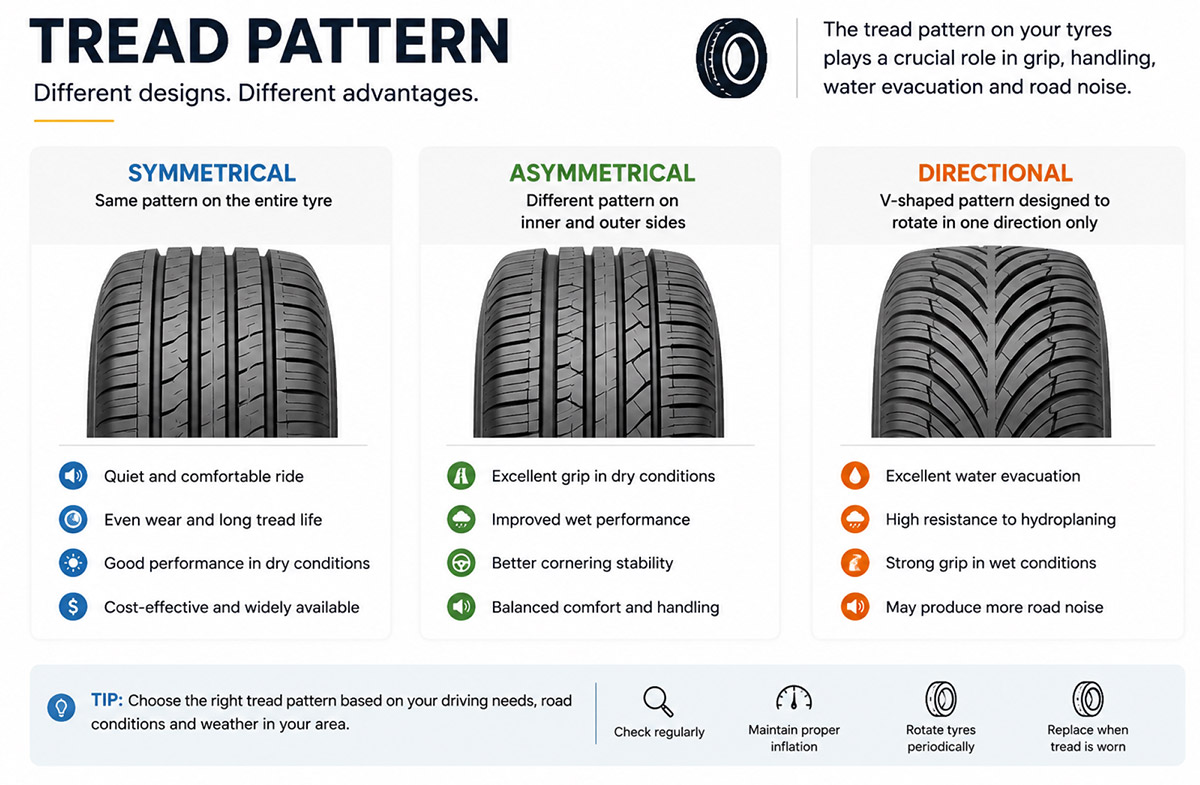
One of the first things people notice about a tyre is its tread pattern. While it may seem purely cosmetic, tread design has a significant impact on how a tyre performs.
Different tread patterns are designed to serve different purposes:
Tread grooves also influence braking performance, steering response, road noise, and overall stability. As tyres wear down over time, their ability to evacuate water decreases, making regular inspections essential for maintaining safety.
Tip: Choose the right tread pattern based on your driving needs, road conditions, and weather in your area.
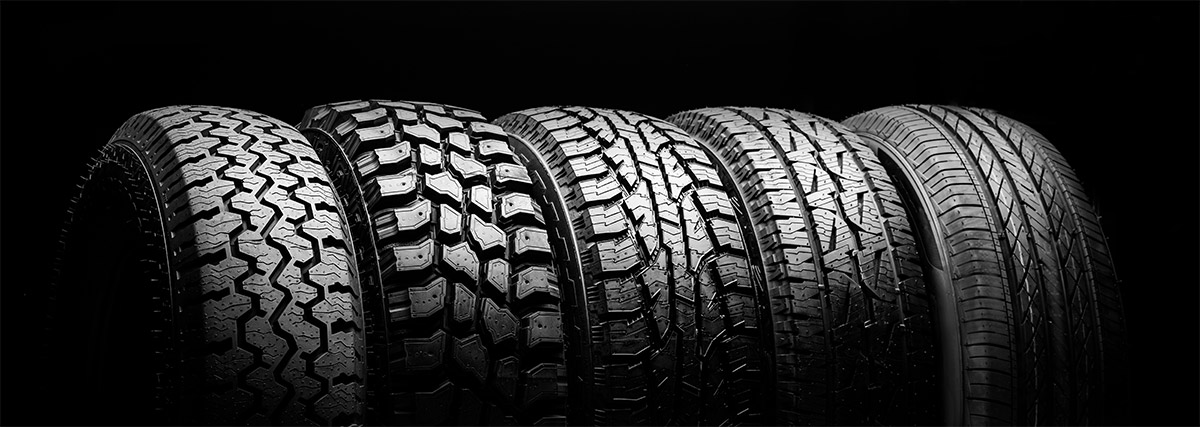
Although tread patterns are easy to see, the rubber compound often has an even greater influence on performance. Premium tyres frequently use advanced rubber compounds containing silica, which helps improve grip without sacrificing durability.
Finding the right balance depends on how you use your vehicle every day.
Grip is one of the most important characteristics of any tyre because it directly affects your ability to accelerate, corner, and stop safely. Dry grip determines how confidently a tyre performs during normal driving, however wet grip is arguably even more critical because slippery roads dramatically increase stopping distances.
A tyre with excellent wet-weather performance is designed to:
Since many accidents occur during rainy conditions, strong wet grip should be a major consideration for Gold Coast drivers who frequently encounter summer storms and unpredictable weather.
Long-lasting tyres can provide excellent value, but longevity should never come at the expense of safety. Several factors affect how long a tyre lasts:
Aggressive acceleration, harsh braking, and improper inflation can significantly shorten tyre life regardless of brand. A tyre with outstanding durability but poor grip may not offer the safest driving experience.
Tyres contribute more to ride quality than many drivers realise.
Rolling resistance refers to the amount of energy required for a tyre to roll along the road. Tyres with lower rolling resistance require less energy to move, allowing the engine to work more efficiently — contributing to improved fuel economy or, in electric vehicles, increased driving range.
While low rolling resistance tyres can reduce operating costs over time, manufacturers must carefully balance efficiency with traction and braking performance to ensure safety isn't compromised.
Every tyre is assigned a load rating and speed rating that indicate its intended capabilities. The load rating specifies the maximum weight each tyre can safely support, while the speed rating indicates the maximum speed the tyre is designed to handle under proper conditions.
Tip: Always ensure replacement tyres meet or exceed your vehicle manufacturer's recommended load and speed ratings. Installing the wrong tyres can negatively affect handling, braking, and safety.
The best tyre depends on where and how you drive. Rather than focusing solely on brand reputation, consider which characteristics will benefit your daily driving most.
| Driving Situation | Ideal Tyre Characteristics |
|---|---|
| Daily city commuting | Comfortable ride, quiet operation, good fuel efficiency |
| Long highway trips | Stability, durability, low road noise |
| Frequent rain | Excellent wet grip and hydroplaning resistance |
| Enthusiastic or sporty driving | Maximum grip and responsive handling |
| Carrying heavy loads | High load rating and reinforced construction |
| Gravel or rough roads | Durable sidewalls and all-terrain capability |
Premium tyres often justify their higher price through years of research, advanced rubber compounds, rigorous testing, and consistent performance across a wide range of conditions. They typically offer shorter braking distances, improved wet-weather grip, quieter rides, and better overall refinement.
However, that doesn't mean premium tyres are the only good choice. Many mid-range tyres deliver excellent safety, durability, and value for everyday drivers — particularly when used within their intended purpose.
The key is selecting tyres that meet your vehicle's specifications and suit your driving habits, rather than simply choosing the most expensive option available.
What makes one car tyre better than another isn't just the brand name or price tag — it's how well the tyre matches your vehicle, driving style, and the roads you travel every day.
Factors such as tread pattern, rubber compound, grip, durability, comfort, fuel efficiency, and load ratings all contribute to overall performance. Understanding these characteristics allows you to look beyond marketing claims and make an informed decision that balances safety, performance, and value.
The next time you're shopping for new tyres, remember that the best choice isn't necessarily the most expensive one — it's the tyre that's designed to meet your specific driving needs.









Electricians home automation air conditioning data security Brisbane.
Electrical Brisbane