Tradesmen Gold Coast
News - Why Choose Acrylic Over Glass?
- Home
- Why Choose Acrylic Over Glass?
- Jul 20, 2026 modified: Jul, 20 2026
Why Choose Acrylic Over Glass?
Acrylic plastic, scientifically known as polymethyl methacrylate (PMMA), is one of the most versatile transparent plastics available today. Originally developed as a lightweight alternative to glass, acrylic has become a preferred material in industries ranging from construction and retail to healthcare and manufacturing. Its combination of exceptional clarity, impressive durability, and ease of fabrication makes it suitable for countless indoor and outdoor applications.
Compared with traditional glass, acrylic offers several practical advantages. It is lighter, significantly more impact-resistant, and easier to shape into custom designs without sacrificing optical quality. These characteristics have made acrylic a popular choice for everything from protective barriers and retail displays to skylights, aquariums, signage, and architectural glazing.
What Is Acrylic Plastic?
Acrylic plastic, or polymethyl methacrylate (PMMA), is a transparent thermoplastic known for its excellent optical properties and long-lasting durability. It is commonly manufactured as sheets, rods, tubes, and blocks, making it adaptable to a wide range of fabrication methods and end-use applications.
Many people recognise acrylic through well-known brand names such as Plexiglas®, Perspex®, Lucite®, and Acrylite®. Regardless of the brand, the material is valued for its ability to provide glass-like transparency while remaining considerably lighter and more resistant to impact.
Unlike ordinary glass, acrylic can be cut, drilled, machined, polished, bonded, and thermoformed with relative ease. This flexibility allows manufacturers and designers to create products with complex shapes and customised dimensions without compromising strength or appearance. Today, acrylic is widely used in residential, commercial, and industrial settings where both aesthetics and performance are important.
Why Acrylic Plastic Has Become So Popular
The growing popularity of acrylic stems from its unique ability to combine multiple desirable properties into a single material. Few transparent materials offer the same balance of optical clarity, durability, weather resistance, lightweight construction, and design flexibility.
For architects and builders, acrylic provides an attractive glazing material that is easier to transport and install than glass. Retail businesses appreciate its crystal-clear appearance for display cases and signage, while manufacturers value its machinability for producing custom components and protective equipment. Even homeowners benefit from acrylic's durability in applications such as greenhouses, windows, furniture, and decorative panels.
Rather than excelling in just one area, acrylic performs well across a broad range of requirements. This versatility explains why it continues to replace glass in many applications where safety, weight reduction, and ease of fabrication are priorities.
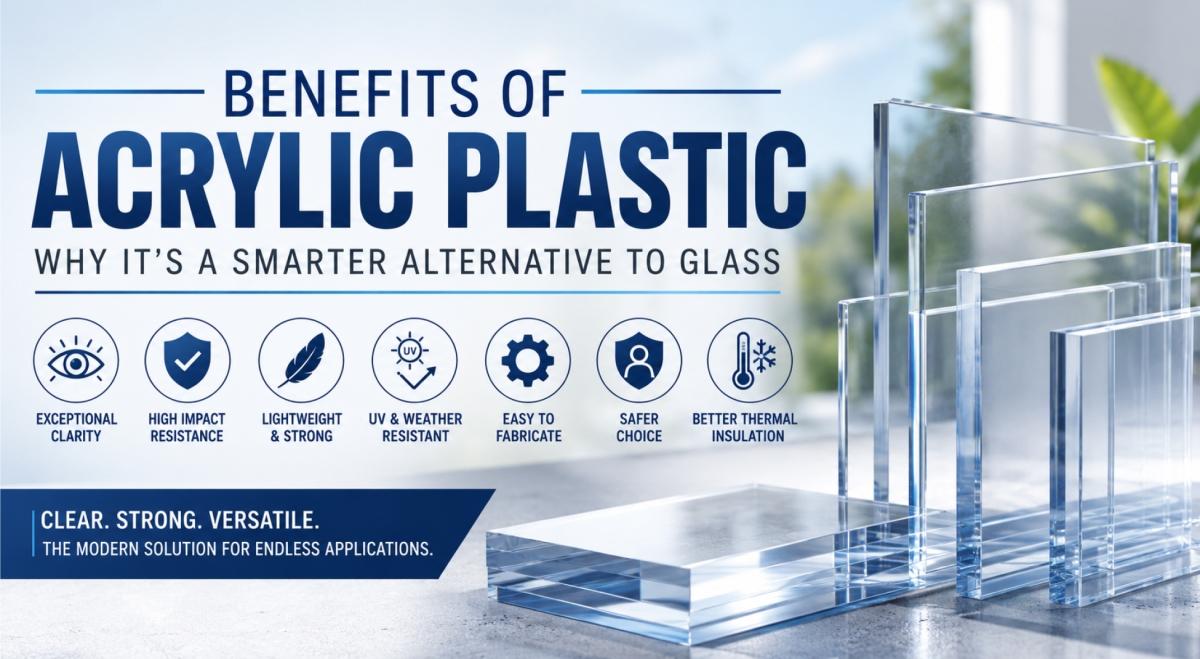
7 Key Benefits of Acrylic Plastic
1. Exceptional Optical Clarity
One of acrylic's most notable advantages is its outstanding transparency. Acrylic transmits up to 92% of visible light, making it even clearer than many types of standard glass. This high level of light transmission produces bright, distortion-free viewing and a glossy, premium appearance. Unlike some transparent plastics that gradually become cloudy, high-quality acrylic maintains its optical clarity for many years, even when exposed to outdoor environments.
Common applications include:
- Retail display cases and museum exhibits
- Picture frames and aquariums
- Skylights and protective viewing panels
2. High Impact Resistance
Although acrylic offers glass-like clarity, it is significantly more resistant to impact. Depending on the product grade and testing method, acrylic can withstand up to 17 times the impact of ordinary glass before breaking. Instead of shattering into numerous sharp fragments, acrylic is far less likely to fail catastrophically under normal use - reducing replacement costs and improving reliability.
Its impact resistance makes acrylic suitable for:
- Safety barriers and machine guards
- Protective windows and display enclosures
- Sports facilities and public buildings
3. Lightweight Yet Strong
Acrylic weighs approximately half as much as glass, making it considerably easier to transport, handle, and install. This lower weight reduces labour requirements during installation while also decreasing shipping costs and structural loads - particularly valuable for large panels and suspended installations.
- Easier transportation and faster installation
- Reduced structural support requirements
- Lower shipping costs and improved handling safety
4. Superior UV and Weather Resistance
Unlike many plastics that discolour or become brittle after prolonged sun exposure, acrylic naturally resists ultraviolet (UV) radiation and harsh weather conditions. High-quality acrylic maintains its transparency and surface finish for years without significant yellowing or fading - making it well suited to Queensland's intense sunshine and humidity.
Common outdoor applications include:
- Outdoor signage and architectural glazing
- Greenhouses, skylights, and roof panels
- Protective covers and weather shields
5. Easy to Fabricate and Customise
When heated, acrylic becomes highly formable, allowing manufacturers to create complex shapes through thermoforming. It can also be laser-cut, CNC-machined, drilled, polished, bonded, engraved, and printed with relative ease - giving designers and manufacturers the freedom to produce highly customised products while maintaining excellent visual quality.
Common fabrication methods include:
- Laser cutting and CNC machining
- Thermoforming and heat bending
- Edge polishing, adhesive bonding, engraving, and UV printing
6. Enhanced Safety
Safety is another reason acrylic is frequently chosen over traditional glass. If acrylic does break, it generally does not produce the sharp, dangerous shards associated with broken glass. This characteristic reduces the risk of injury, particularly in public environments.
For this reason, acrylic is commonly used in locations where human safety is a primary concern, including schools, hospitals, retail stores, offices, and recreational facilities.
7. Better Thermal Insulation
Acrylic provides better thermal insulation than standard glass because it conducts heat less readily. This helps reduce heat transfer between indoor and outdoor environments, contributing to improved energy efficiency in certain applications - helping maintain more stable temperatures in greenhouses, skylights, and windows while potentially lowering heating and cooling demands.
Tip: Although acrylic is not a replacement for specialised insulated glazing systems, its insulating properties provide a practical advantage over conventional single-pane glass in many everyday applications.
Things to Consider Before Choosing Acrylic
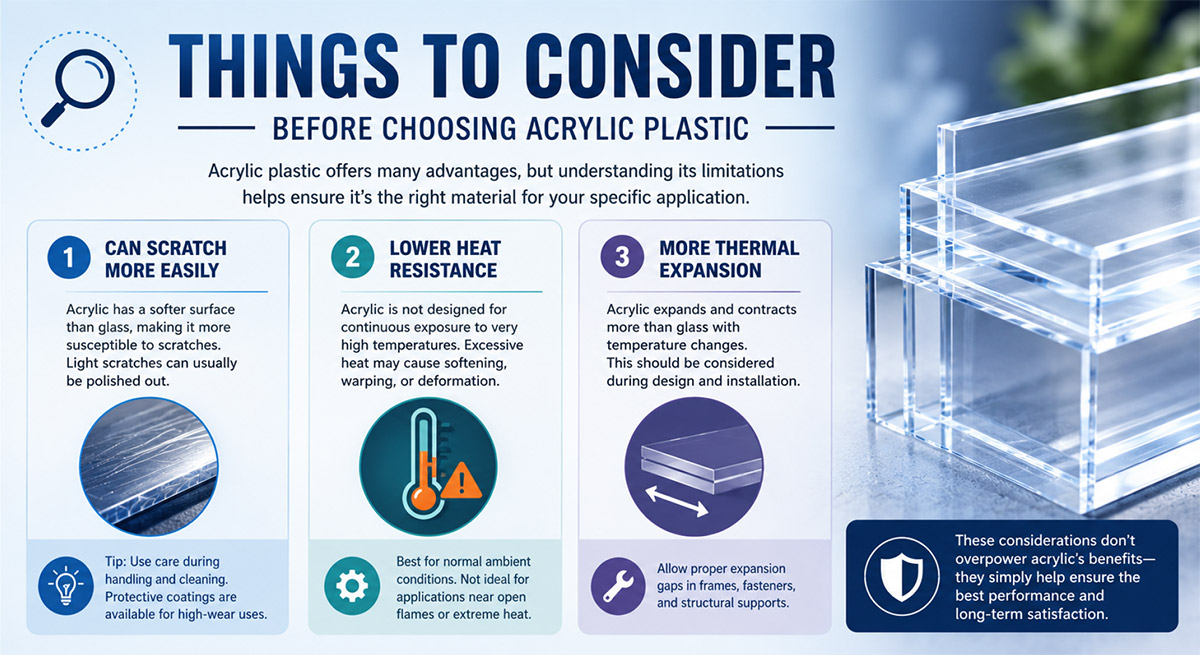
While acrylic offers many advantages, it is important to understand its limitations to determine whether it is the best material for a particular application.
It Can Scratch More Easily
Compared with glass, acrylic has a softer surface and is more susceptible to scratches. However, many light scratches can be polished out, and scratch-resistant coatings are available for demanding applications.
Lower Heat Resistance
Acrylic performs well under normal environmental conditions but is not suitable for continuous exposure to very high temperatures. Excessive heat may cause the material to soften or deform over time.
Thermal Expansion
Like most plastics, acrylic expands and contracts more noticeably than glass as temperatures change. Designers and installers should account for this movement - especially in large outdoor installations.
Acrylic vs Glass at a Glance
| Property | Acrylic | Glass |
|---|---|---|
| Light transmission | Up to 92% | 80–90% |
| Impact resistance | Up to 17x stronger | Shatters under impact |
| Weight | ~50% lighter | Heavy |
| UV resistance | Excellent | Moderate |
| Fabrication flexibility | High - cuts, bends, moulds | Limited |
| Scratch resistance | Lower (coatings available) | Higher |
| Heat resistance | Moderate | High |
| Safety on breakage | Safer - no sharp shards | Sharp dangerous fragments |
Commercial Case Study
To Sum it Up
Acrylic plastic offers an impressive combination of clarity, strength, durability, and versatility that makes it a preferred alternative to glass across many industries. Whether you're designing architectural features, manufacturing retail displays, building protective barriers, or creating custom products, acrylic provides a balance of performance and practicality that few transparent materials can match.
Its exceptional light transmission, high impact resistance, lightweight construction, weather durability, and ease of fabrication allow it to perform reliably in both indoor and outdoor environments. While considerations such as scratch resistance and heat tolerance should be evaluated for specific applications, these limitations are often outweighed by acrylic's many advantages.
For projects that require a transparent material combining aesthetics, safety, and long-term performance, acrylic plastic continues to be one of the most dependable and versatile choices available today.
Recent Articles

Why Choose Acrylic Over Glass?
- Jul 20 2026
- /
- 482

What Makes One Car Tyre Better Than Another?
- Jul 06 2026
- /
- 457

Self-Employed vs. Sole Trader
- Jul 03 2026
- /
- 962

Running a Small Business in a Downturn
- Apr 14 2026
- /
- 669

Door Closer Adjustment
- Mar 11 2026
- /
- 1726

Why 'Made in China' still wins in Australia
- Jan 21 2026
- /
- 1737

Plumber vs Electrician SEO
- Oct 24 2025
- /
- 1387

How long does concrete last?
- Jul 21 2025
- /
- 1445

Can small mechanics service modern cars?
- Jul 14 2025
- /
- 932

Social Media Strategies for a Sole Trader
- Jun 11 2025
- /
- 1497
View All News Articles
Weiss Electrical
Electricians home automation air conditioning data security Brisbane.
Electrical Brisbane